
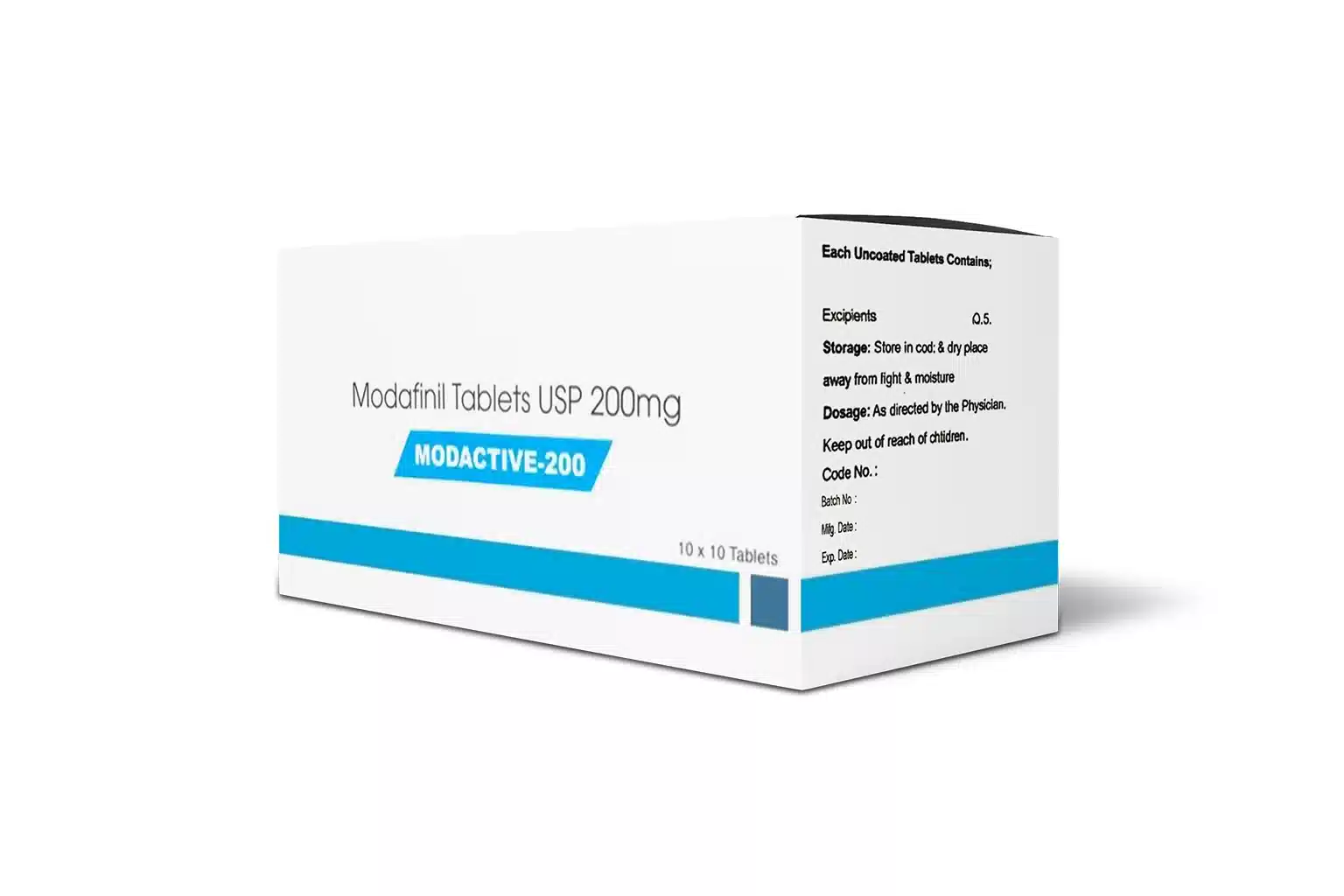

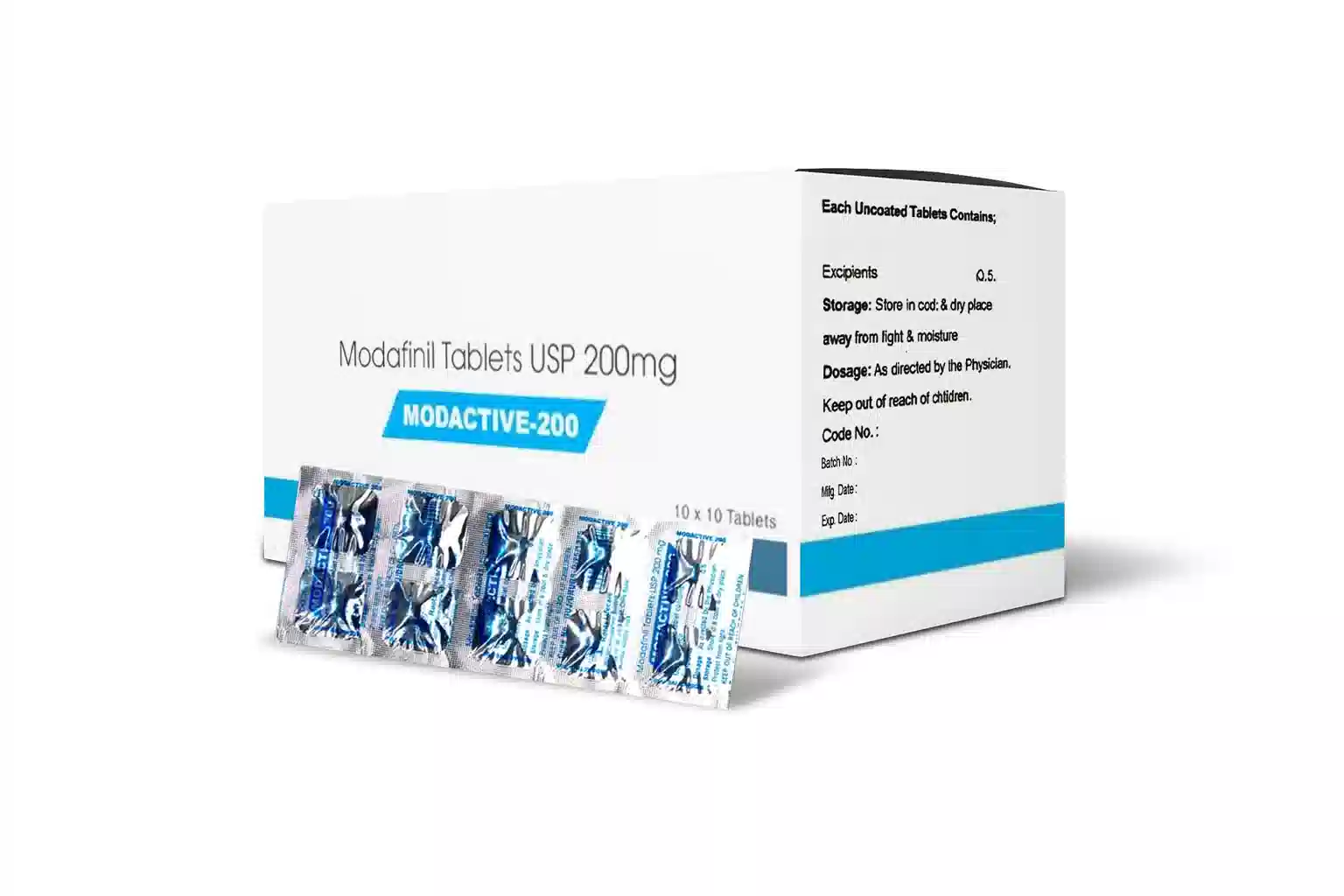
Modactive 200 mg is a wakefulness medication that consists of Modafinil. It is designed to treat sleep related disorders and promote wakefulness while enhancing cognitive performance. This is a dual-action medication and addresses conditions like Narcolepsy, Obstructive Sleep apnoea and Shift Worker Sleep Disorder.
MECHANISM OF ACTION
Modafinil’s mechanism of action isn’t fully understood, but here’s what’s established:
Primary target: Dopamine transporter (DAT) inhibition
- Modafinil binds to the dopamine transporter and blocks dopamine reuptake, increasing extracellular dopamine levels in the brain, particularly in regions like the nucleus accumbens and striatum.
- This is considered central to its wake-promoting effects-modafinil has minimal to no effect in DAT knockout mice, and its behavioral effects can be blocked by dopamine receptor antagonists.
Norepinephrine transporter (NET) inhibition
- Modafinil also weakly inhibits the norepinephrine transporter, increasing noradrenergic signaling, which likely contributes to alertness effects, especially in the hypothalamus and other arousal-related regions.
Key Features
| About Modactive 200 mg | |
| Drug class: Wakefulness promoting agent | |
| Chemical class: Diphenylmethanes |
| Product details | |
| Active Ingredient | Modafinil |
| Inactive Ingredients |
|
| Dosage Form | Tablet |
| Route of administration | Oral |
| Packaging | Blister Pack |
| Pack size | 10*10 |
| Strength | 250 mg |
| Used for | Excessive sleep disorders |
| Approximate Onset of action | 30 to 60 minutes |
| Duration of action | 12 to 15 hours |
| Shelf life | 24 months after the manufacturing date |
| Storage Instructions | Store at room temperature away from sunlight and moisture |
INDICATIONS
- Excessive sleep disorders like Narcolepsy, Shift worker Sleep Disorder and Obstructive Sleep Apnea
- Attention Deficit Hyperactivity Disorder (ADHD)
- Depression
- Fatigue related to certain medical conditions
- Cognitive support in selected patients as directed by the physician
This medication should only be used for the condition that your physician has prescribed for.
DOSAGE
Narcolepsy: 200 mg once daily, taken in the morning
Obstructive sleep apnea (OSA): 200 mg once daily in the morning (used as an adjunct to standard OSA treatment like CPAP, not a replacement for it)
Shift work disorder: 200 mg taken about 1 hour before the start of a night shift
SIDE EFFECTS
Common (≥5%, often dose-related)
- Headache (most common – up to ~34% in trials)
- Nausea
- Nervousness / anxiety
- Insomnia / difficulty sleeping (especially if taken too late in the day)
- Dizziness
- Diarrhea
- Dry mouth
- Back pain
- Decreased appetite
- Rhinitis
Less common but notable
- Palpitations / tachycardia
- Elevated blood pressure
- Nervousness progressing to anxiety or agitation
- Insomnia significant enough to disrupt normal sleep
- Digestive upset (dyspepsia)
Serious (rare, but require immediate medical attention)
- Serious skin reactions: Stevens-Johnson syndrome (SJS), toxic epidermal necrolysis (TEN), DRESS syndrome (drug reaction with eosinophilia and systemic symptoms) – this is a boxed-adjacent warning in prescribing info. Any new rash while on modafinil warrants stopping the drug and seeking medical care.
- Angioedema / anaphylaxis: Swelling of face, lips, tongue, throat; difficulty breathing
- Psychiatric symptoms: Mania, hallucinations, suicidal ideation, aggression – more likely in people with pre-existing psychiatric conditions
- Cardiovascular events: Chest pain, arrhythmias
INTERACTIONS
Drug-drug interactions are
- Hormonal contraceptives
Modafinil can make hormonal contraceptives less effective and increase the risk of pregnancy.
- Medications processed by the liver
CYP2C19 substrates: Drugs like omeprazole, diazepam and phenytoin may stay in the system longer due to Modafinil and increase the risk of toxicity and severe side effects.
Cyclosporine: Modafinil can reduce the effectiveness of cyclosporine by reducing the blood concentration of cyclopsporine.
- Other Stimulants & CNS drugs
ADHD medications: Medications that are used for the treatment of ADHD like amphetamine, methylphenidate and lisdexamfetamine when combined with modafinil can increase the risk of side effects like elevated heart rate, high blood pressure and severe anxiety.
Antidepressants: Modafinil can interact with medications like SSRIs e.g. citalopram.
Anticoagulants: Modafinil can affect the blood levels of anticoagulants like warfarin making it less effective.
PRECAUTIONS & WARNINGS
- Take this medicine exactly as your physician has prescribed. Do not increase, decrease, or stop the dose without medical advice.
- This medication helps improve wakefulness and reduce excessive daytime sleepiness, but it does not cure the underlying sleep disorder.
- Your alertness may not return completely to normal. Avoid driving, operating machinery, or performing tasks that require full attention until you know how the medicine affects you.
- If you forget to take a dose and it is almost time to sleep, skip the missed dose and continue with your regular schedule. Do not take it late in the day.
- Extra caution is advised in people with liver or kidney impairment, during pregnancy or breastfeeding, in older adults, in those with a history of cardiovascular disease, and in individuals with a history of substance misuse. Your doctor may recommend additional monitoring or dose adjustments.
- Inform your healthcare provider if you have a history of heart conditions, including angina, a recent heart attack, irregular heartbeat, or other significant cardiovascular disorders, before starting this medication.
- Avoid or limit alcohol consumption while taking this medicine, as alcohol may increase the risk of side effects and reduce alertness.
CONCLUSION
Modactive 200 mg is a generic modafinil brand, marketed as bioequivalent to the original brand-name Provigil. It contains 200 mg of modafinil as its sole active ingredient-so pharmacologically, everything that applies to modafinil in general (mechanism, indications, side effects, interactions) applies directly to Modactive 200 mg. It should be used under medical supervision and care is advised for patients who have a history of cardiovascular issues, psychiatric issues, etc.
FAQs
1. Is Modafinil addictive?
Modafinil carries a lower risk of dependence than usual stimulants, but should only be used as directed and not abused.
2. Who should avoid Modactive 200 mg?
Pregnant, breastfeeding women or women who are trying to get pregnant, hypersensitive to modafinil, etc should avoid Modacative 200 mg.
3. What are the signs of overdose of modafinil?
The primary signs of overdose are tachycardia (fast, pounding heartbeat), agitation, hypertension, severe anxiety, etc.
4. Can it be combined with caffeine?
There’s no established dangerous interaction, but combining two wake-promoting agents can amplify anxiety, insomnia, and cardiovascular effects (elevated heart rate/blood pressure) rather than adding proportional benefit.
5. Is it safe for older adults?
Clearance is reduced in the elderly, so lower doses are usually recommended. Also, the cardiac risk with age makes it more important to monitor for cardiovascular side effects.
Marie Weber –
I feel active all the time in my office. Even if, I acitively work after retuning my home. Previously, I felt tired when I came back home or after lunchtime. All of this happens because of Modactive 200 mg.